The Invisible Battle: Why AI Renders Aren't Saving Interior Design (And What Will)
AI can render a room in thirty seconds. It still can't tell you whether the chair will arrive on time, the wall can be moved, or the budget will hold. The gap between how a space looks and how it gets built is where interior design actually lives.

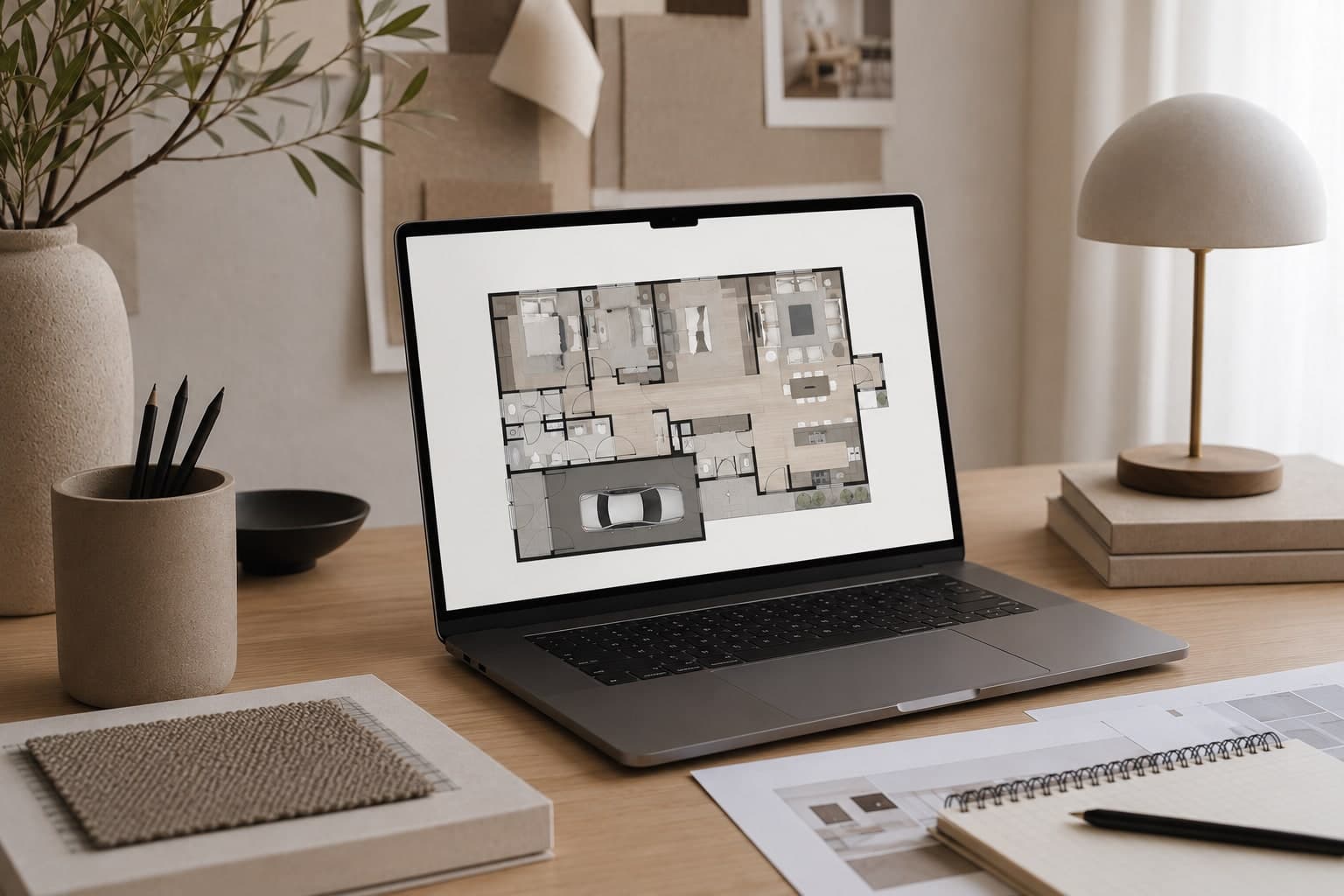
We hear it every single day that AI is taking over. In so many ways, it's a massive win. It saves us hours of writer's block, sparks fresh creative ideas, and generates deliverables in seconds that used to take specialized professionals days. But it's becoming extremely obvious that AI has a massive blind spot.
It understands how things look, but it has no idea how things actually get done. Nowhere is this gap wider than in the world of interior design and architecture.
Half the Battle: The AI Automated Floor Plan
Lately, tech platforms love to market shiny new AI tools to the design world. They promise “instant 3D floor plans” or “photorealistic AI room renderings in 30 seconds.”
But to any practicing designer, that's barely even half the battle. Behind every polished deliverable presented to a client, there are countless rounds of revisions and a web of competing factors: budget, timeline, building codes, zoning rules, contractor limitations, product availability, and the designer's own intuition built over hundreds of projects.
So the question becomes: if AI is already good at writing, image generation, and so many other fields, why does it still struggle so much with floor plans, construction details, and real design coordination?
To understand that, you have to understand how AI becomes good at anything. AI models learn by training on massive amounts of data. They recognize patterns, connect certain decisions to certain outcomes, and improve when they have access to both a large quantity and a high quality of examples.
AI is good at writing because it has been trained on an enormous amount of written human knowledge from the web, books, articles, documentation, and public conversations. But architecture and interior design do not work the same way.
Architects and designers have historically treated their floor plans, construction drawings, specifications, and detailing as closely guarded intellectual property. Most of the best work is private. It lives inside studios, project folders, client presentations, permit sets, and construction documents that never become public training data.
And even if more floor plans were available, design is not a universal puzzle with one correct answer. The same client brief in India, Iceland, California, or Dubai can require completely different solutions because climate, culture, materials, codes, labor, lifestyle, and local construction practices all change the answer.
That is why generic AI tools can create something that looks like a floor plan, but still fail to understand whether it can be built, approved, procured, installed, and lived in.
The general public rarely understands the true workflow behind interior design because they only see the end product. They see a gorgeous room and think the designer's job was simply picking out paint swatches and a sofa. They don't see the complex CAD detailing, the product specification, the vendor communication, and all of the backend administration.
Designers Are Actually Project Managers
What makes a space beautiful isn't just a concept, it's the execution. Designers don't just sketch spaces, they procure them.
Once a client approves a look, a mountain of logistics begins. How do you keep an accurate record of this procurement? How does a single chair make it from a boutique manufacturer in Italy to a client's living room floor?
The real magic of a designer happens behind the scenes:
Tracking endless vendor lead times.
Coordinating with contractors on exact plumbing and electrical placements.
Managing freight, delivery schedules, and damaged shipments.
Staying on top of tight, moving budgets.
This is where designers actually make their money. Clients aren't just paying for good taste, they are paying for a luxury white glove service. The designer steps in as a project manager, taking a massive weight off the client's shoulders and handing them back their time.
Yet, the tech industry keeps building tools for the “easy” part, the visuals, while ignoring the logistical chaos.
Why We Built Moodiri
As designers and architects ourselves, we looked around and realized that the existing platforms were failing us. There were plenty of disjointed apps, one for invoicing, one for time tracking, one for mood boards, one for procurement, but nothing that unified the chaos. There was no system smart enough to operate as a true “digital employee” for a busy studio.
We didn't need another rendering bot. We needed a system that understood the hustle. That's why we created Moodiri.
We built it from the ground up to combine all the scattered, moving parts of a design business into one intelligent ecosystem. Moodiri handles the heavy administrative lifting, records your procurement effortlessly, and connects the dots between you, your vendors, and your contractors.
By automating the backend drag, Moodiri acts like an extra team member, giving you back your time so you can stop wasting time with admin and logistics and focus entirely on your passion, designing spaces that improve lives.
Don't miss the next one. Leave your email and we'll send a note when we publish.